Driving in Crete - Tips, Tricks, and Valuable Info
The prospect of driving in Crete can be daunting for many people. Even those of us who are used to driving on the right side of the road, driving in Greece may seem a little frightening. This is a shame because you will miss out on a lot by not exploring the whole of the island of Crete with the freedom that only a car can provide.
There are many benefits to driving in Crete. The roads in Crete are quiet on the whole, except in the centre of the large towns.
This means you can virtually guarantee how long it will take you to get somewhere, because there is virtually no congestion or traffic jams!
Driving in Crete
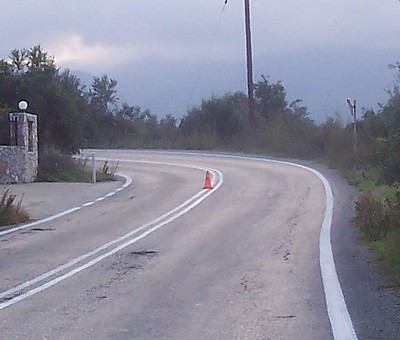
The bus service in Crete is excellent, but traveling this way will restrict you in your ability to explore. They are usually quite infrequent (usually one an hour on the main routes), especially in more remote areas, and off season.
Roads in Crete can sometimes be a problem if there are road works, but the low volume of traffic generally means that queues are the exception rather than the rule.
There is a suspicion that Crete shares the one traffic cone (only joking).
Greek drivers have such a bad reputation, and that reputation seems well founded when you take heed of the statistics for accidents and road deaths in the country as a whole.
There are many reasons for this bad record, and I think these are some of the main ones:
- The Greek character
- Poor or inadequate road signs and markings
- Quality of roads
The Greek Character
I think it helps if you are aware of the Greek personality when it comes to driving in Crete and sharing their roads with them.
An important factor in the Greek personality is their it-will-never-happen-to-me mentality, probably due to the fact they put a great deal of their faith and safety in the hands of God. Don't be surprised if you see a family of 4 on a scooter, complete with dog in the front basket!
In place of fluffy dice, most cars will have worry beads dangling from the rear view mirror, and many cars (including taxis) will be adorned with pictures of saints and other icons.
So, with this fail-safe back-up, why bother with a seat belt? You'll also often see children frolicking in the car without being strapped down too.
Surviving hurtling round a sharp bend at high speed is placed in hands of the Almighty!
Unfortunately, we can't all rely on such Divine attention, and so it's a good idea to take extra care and maintain maximum vigilance when driving in Crete - always expecting other drivers to behave badly.
Use of the horn is commonplace on the roads in Crete, but don't take it personally. Driving in Crete and Greece in general the use of the horn is used as it should be used - as a warning signal of their approach. In the UK, the horn is almost exclusively used as an indicator of annoyance or an expression of anger or aggression. Not so much on the roads in Crete. This lays bare the great urban myth of the Greek driver - rude, impatient and aggressive.
It is true that the shortest measurement of time in Greece is the period between the traffic lights turning green and when the first car is expected to move off. Failure to move away quickly often results in a blast of horns. But don't jump to the wrong conclusion about this either. This is another big myth perpetuated by many ex-pats and foreigners driving in Greece and Crete.
Although this might happen (I know it happens in the UK too), a close look at the Cretan road junction will explain another reason for this apparent "impatience".
Unlike in the UK and most other north European and American cities, the traffic lights at junctions on the roads in Crete are set close to the waiting car or high above on a gantry. Usually, there are no traffic lights on the opposite side of the road on the roads in Crete. Quite often therefore, the first car can find it hard to see the light change because they are too close or slightly behind.
Hence, the habit of drivers in the queue telling the first car that the lights have changed to green with a toot on the horn.
Although friendly and welcoming, Greeks are generally a volatile and excitable race. They are quick to raise their voice and seemingly unafraid to express their emotions, and this reflects in their driving. Couple this with roads that are often of a poorer quality than most serving the same volume of traffic, and you produce accidents - and one of the worse traffic accident records in Europe in fact.
Roads in Crete
There is really only one main highway in Crete and this is the E45 which runs along its width from Kastelli Kissamos in the west to Sitia in the east. Commonly known as the New National Road, it is not a true motorway that you might be used to in the UK, Europe or North America for example.
In places it has multiple lanes, hard shoulders and a central barrier, but not along its entire length. Often it will appear like a regular road with one lane, no central barrier and regular junctions and crossroads. When driving in Crete you can also shop along the National Road, particularly between Heraklion and Rethymnon. It hosts many fruit and vegetables stalls along the route. You can stop and stock up with cheap locally grown produce.
The Crete driving speed limit can vary too, from 100km/h in some parts and 90km/h in others. Speed limits are further reduced in built up areas it passes through, or where there are junctions joining the main highway. So you need your wits about you when driving in Crete.
Generally this is a good road and is rarely busy. We've only seen congestion on the approach to Heraklion from the east, and the area where the road is being upgraded east of the town.
Many other roads in Crete are good too, such as the main roads that branch off to the towns and villages on the southern coast. The Old National Highway runs parallel with the E45 and is a good road that follows the coast and in places is very picturesque.
Driving in Crete in towns can be different. In towns and villages roads will often have no pavements, so expect pedestrians to vie for space.
Many roads in Crete are narrow country and mountain roads with blind bends and steep inclines. Sealed roads will turn to dirt tracks, often only suitable for 4 wheel drive vehicles. So if you intend driving in Crete in a hire car, ensure you have the right type for the terrain you want to explore.
Road Signs and Markings
When driving in Crete you'll need to know road signs and markings are generally poor in Crete, and sometimes downright confusing, so keep your wits about you. It's not uncommon for some signs to be completely obscured by vegetation, advertising stickers, graffiti - and gun shot holes!
Cretans are generally good at ignoring road signs and speed restrictions. The double solid white line in the centre of the road prohibiting overtaking is frequently ignored, so don't rely on it as an indication that nothing will be heading at you on your side of the road when approaching hills and bends.
When driving in Crete you might be a little perplexed by some road signs pitted with dents and holes. This is evidence of a Cretan using the sign as target practice with his gun. I am sure it's not a reflection of his contempt for the rules of the road, rather than a need to express his hunting instincts in the absence of much legal game available on the island!
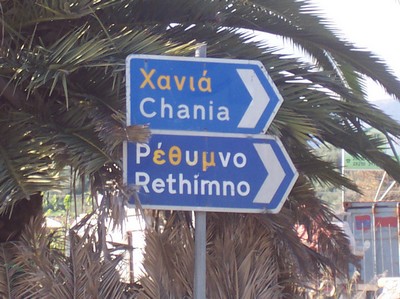
When driving in Crete you’ll find nearly all direction signs are bi-lingual, showing the place names in Greek and English. They often look nothing like each other, but in all cases (almost) the English equivalent is actually a true phonetic representation of the Greek version. This example shows Chania (Χaνιá) - which is one of the more difficult translations, and is pronounced Han-YA!
Crete Driving Speed Limit
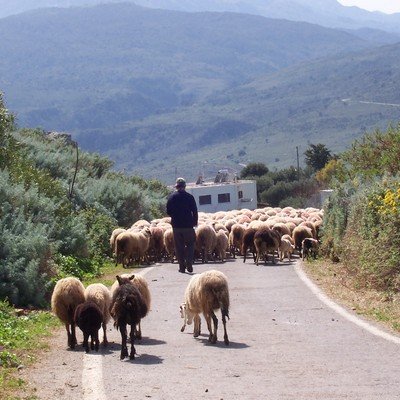
The Crete driving speed limit is indicated by road signs, but be careful when driving in Crete because signs are often obscured by vegetation - and not seeing them is no defense.
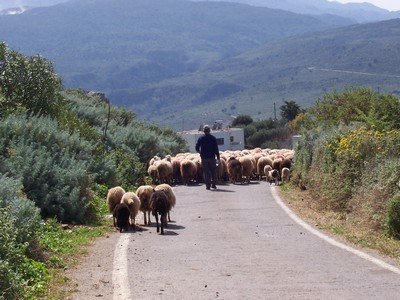
You'll need to watch out for some hazards when driving in Crete you might not expect to see in less rural communities, and this might mean going much slower than the speed limit allowed. Shepherds will use the road to move their flocks of sheep and/or goats of course, and you will expect to find many slow and odd looking tractors, carts and some donkeys on your travels when driving in Crete.
Courtesy and Some Driving Conventions
Despite popular belief, and what you might hear from many foreigners living in Greece, the Cretans are courteous drivers. Bad manners are often misinterpreted out of cultural and other misunderstandings.
For example, in the UK it is a rule that pedestrians have priority when crossing at a designated zebra or pelican crossing. This is not the case in Crete. So don't expect drivers to stop if you are waiting to cross at what looks like a zebra crossing. They aren't being rude, just following the conventions they and other drivers are used to.
When driving in Crete another convention at traffic signals is important to be aware of. You will sometimes see flashing amber lights, particularly flashing amber arrows. If you are turning in the direction of the arrows, you must expect pedestrians to be crossing (because they will have a green light to cross), and give way to any already crossing the road.
In short, flashing amber means: yes, you can go, but you don't have priority or right of way.
There is an important driving convention in Crete that really demonstrates the inherent courtesy of the Cretan driver. On the New National Road, the single lane sections are a bit too narrow along the majority of its length to enable overtaking without crossing over to the opposite side of the road. It is the habit of almost all drivers to move over onto the "hard shoulder" to facilitate passing in these circumstances. This is perfectly acceptable, and you will often see slow moving vehicles using the hard shoulder as a matter of course.
Because of the nature of many roads in Crete, it won't always be possible for vehicles meeting each other from opposite directions to pass safely. This means that one will have to stop and let the other through.
The convention here is the same as the UK. The vehicle on whose side the obstruction is (if there is one) gives way. If you do give way, don't be surprised or upset if you don't get a thank you or a smile. Greeks don't do that, just as they won't expect or need a thank you from you if they let you pass. Don't interpret this as rudeness, it's just why should I expand the energy thanking you for something you should do in the first place!
You can generally put this economy of action and attitude down to the heat! But also a raised open palm often used in the UK as a 'thank you' to drivers is a rude gesture in Greece. It is equivalent to sticking up two fingers in the UK!
Are Cretans rude? No!
Road Side Shrines
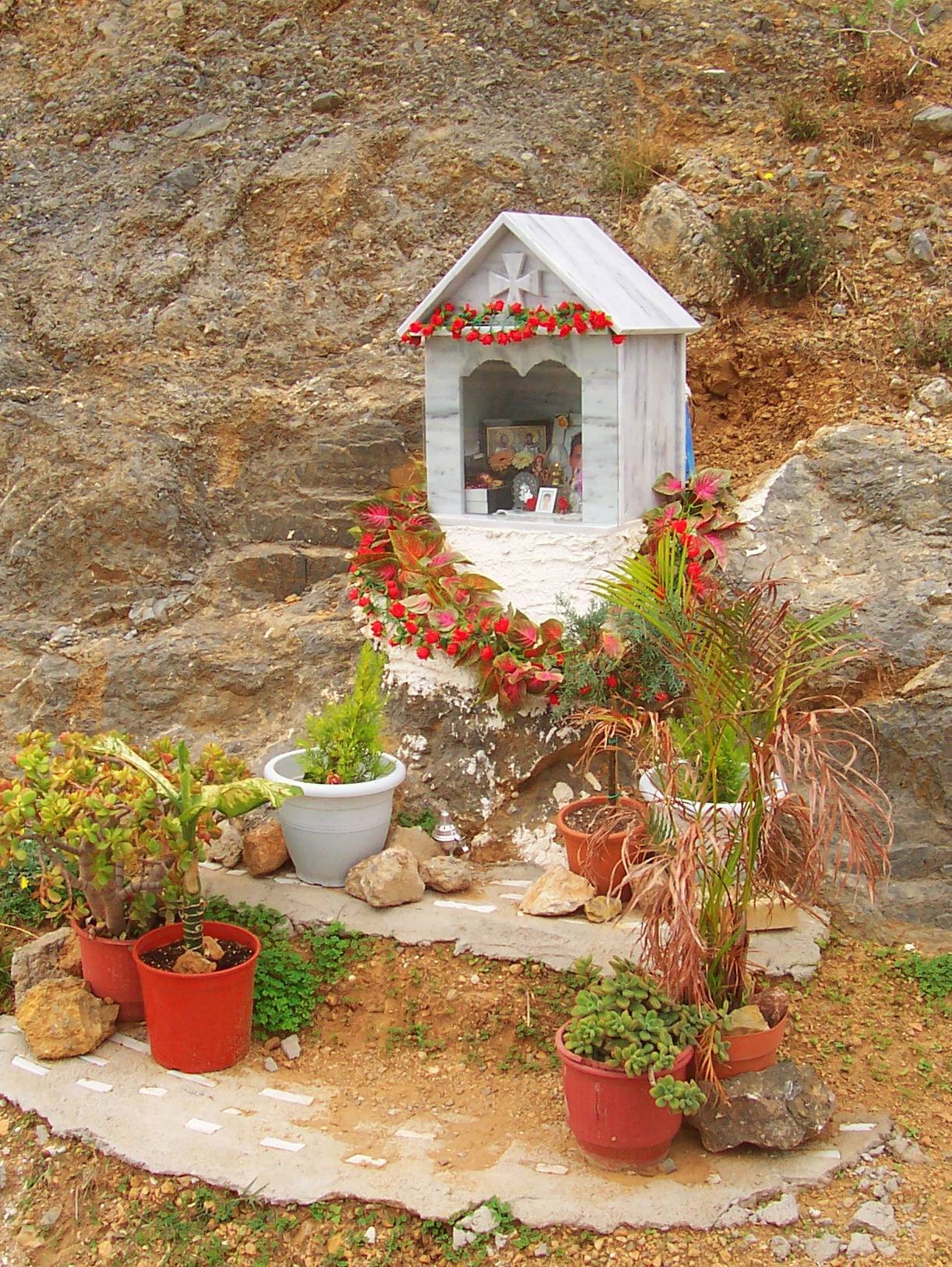
When driving in Crete you will often come across shrines.
Shrines are a common sight along the road in Crete (and Greece and many other countries), ranging from small glass cabinets on metal legs to elaborate brick built altars.
Mostly these shrines are erected by family members to honour and remember loved ones who have died in traffic accidents, but also the Cretans erect shrines to saints too.
Inside you will often see candles, pictures of saints, icons and often some personal items belonging to the person to whom the shrine is dedicated.
Traffic Police!
When driving in Crete along the New National Road (and other main roads) you may sometimes see police flagging motorists down. These are the drivers who have been caught speeding by Radar.
The equipment at their disposal is quite sophisticated and often discharged from a concealed police car further up the highway.
For minor speeding offenses you can expect a small fine paid at the post office. Going well over the speed limit may result in a court appearance!
It's true to say that you don't often see the police in Crete. Certainly they are not as evident as they are in the UK. This has a lot to do with the fact that there is such a low crime rate in Crete.
There is a consequence. Many Cretans will try to get away with some things on the road, so be prepared for drivers going through red lights (especially when the road is quiet). Also, the wearing of safety helmets appears optional - it's not, but sometimes the police don't seem to bother!
Drinking and driving is illegal of course, but I've often seen men leaving a kafeneion having drunk a couple of carafes of raki and then promptly getting into their cars (or tractors) and driving home.
On the other hand, at one kafeneion near where we lived in Istron, an old man would regularly drink several glasses of raki, but would always get a lift at the end of the night - from his 13 year old grandson!
Drinking and driving is a very bad thing and those who do it can expect severe penalties if caught, and a very good chance of being in an accident.
Parking Up
There's normally no problems with parking up in Crete until you get into the Big Four Towns (Chania, Rethymno, Heraklion and Agios Nikolaos), the smaller towns, and bigger "villages".
It's best to try and park just outside the centre, especially of Chania and Heraklion. We have parked with no problem on the Marina car park in Agios Nikolaos (except when getting there late in the day in high season). Also, we usually park on the sea front at Rethymno (just follow the signs), or the huge car park area at the marina - although we have not tried this in July and August!
We don't mind walking, but some people are less mobile, and so there's usually no alternative but to seek out parking in the centre of town. There's plenty of options, but it will cost of course, and car parks do get full in the High Season, so get there early.
If you have a Blue Badge (UK drivers/passengers), or other document showing entitlement to disability parking, then take it with you on holiday as there are some limited opportunities for disability parking in town centres.
The Greeks appear to be quite lazy and will try to get just outside where they want to go, and this will manifest itself in much double (and triple!) parking. The police or traffic warden will come along and blow a whistle, giving the owner a chance to move it. If no one shows, they will write a ticket.
Filling Up
Filling up with fuel is easy in Crete - you don't have to get out of your car!
Almost always (unless there is a prominent sign saying Self-Service which is very rare) an attendant will fill up for you. Just say how much you want in Euros, or say "Full!"
You don't have to tip (but you can of course!)- he or she will be happy for your custom.
Driving in Crete - What You Need
When driving in Crete if you are a European Union citizen, your driver's license works in Greece, otherwise you would need an international driver's license.
If you are a UK citizen and as the UK is no longer in the EU, you may need an International Driving Permit (IDP) to drive in Crete, Greece. According to the UK government you need to have a valid Great Britain (GB) or Northern Ireland driving licence to get an IDP. If you already have an IDP, make sure it’s still valid in the country you’re visiting.
Car hire is freely available and all the big European companies are represented, but there are a wealth of smaller Cretan firms all over the island. Rates are good, and there's a wide choice of models.
It’s a good idea to book your hire car in advance. During the height of the season in July and August when demand is at its peak booking is essential.
Choose your rental car based on what you want to do. If you are planning a trip to the mountains or over rough terrain, you'll need a big powerful car to get up the slopes, or even a four wheel drive if the roads are very poor.
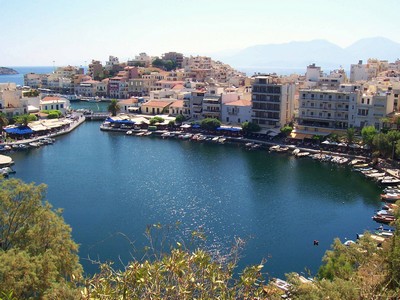
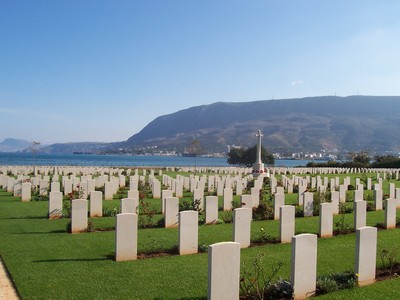
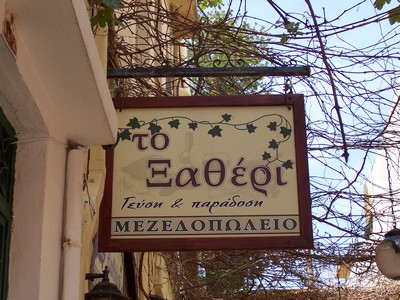
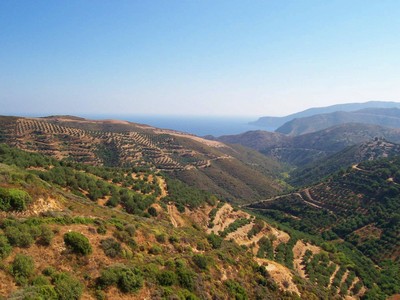
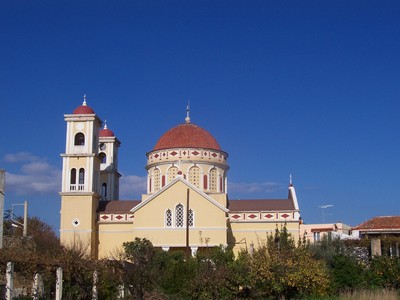
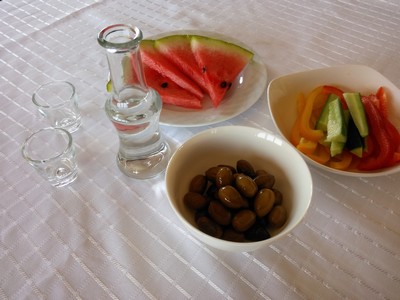
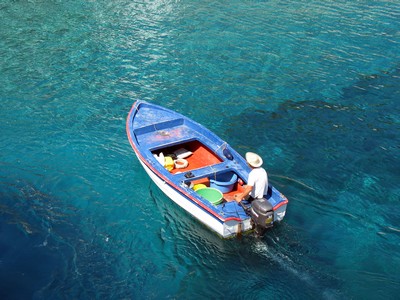
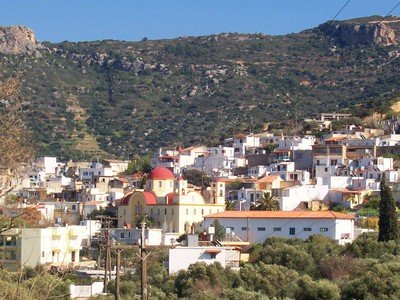
Just Some of the Reasons We Love Crete...



Did you love this page? Please share it with your friends!
© Copyright All Original Content 2006 - 2024 Completely-Crete.com. All
Rights Reserved. Reproduction in whole or in part without permission is
not permitted.
Click here to learn about developing your own money-generating website
from Solo Build It! - even with little or no web experience!