Crete Food and Drink Combines Simplicity and Taste
Cretan Food is the best in the world – that’s what we believe! It’s certainly the healthiest – and that’s official!
On the Greek Island of Crete, and all Greece, eating is a way of life, and any meal can take all afternoon or all night. Good wine, good conversation, and a bit of the strong stuff - Raki, these are just as valuable ingredients to a meal in Crete as are the fresh produce and the generations of experience accumulated by the cook. All this combines to make eating the Cretan way such a satisfying and magical experience.
The best thing about the Cretan food is its simplicity. No overpowering spices or cooking processes mar the flavour of the fresh, locally gathered produce.
The Cretan Olive
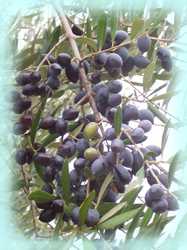
No other single product is more important to Cretan food, the famous Cretan Diet and Greek cooking generally than the olive. From this small fruit, olive oil is produced.
"Elixir of Life", "Liquid gold" and "Gift from the Gods" are all terms that have been applied to olive oil. Ask a Cretan farmer in his 80’s if he agrees with the exalted praise given to the humble oil he produces and he will smile widely, moustache turning up at the sides, eyes twinkling with merriment, pat his bottom lip with his finger and say:
"Einai poli kala." (It is very good!)
Click the link to learn more about this very special Cretan food and how it influences the Cretan diet and culture.
Cretan Olive Oil
Thyme Honey of Crete
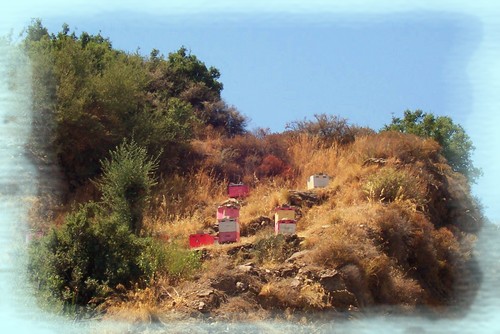
Crete is famous for its honey and is an important exporter to many countries thoughout the world. A walk in the thyme covered hillsides will often soon reveal a crop of brightly coloured bee hives – a growing increase in the buzzing noises will alert you too!
Crete's golden honey is sold everywhere, and is very popular with visitors to Crete who can choose from a wide selection in the shops in the main tourist resorts. It's a good idea to try and get the honey that's not in the fancy jars, though. In fact, if you can find a local farmer or honey producer, he or she will sell it to you at a very good price.
Click the link to learn more about Cretan honey.
Crete Honey
Crete Wild Herbs
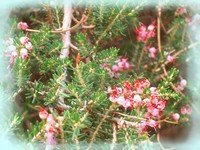
One of the things that will hit you as you walk around Crete away from the towns is the smell of herbs in the air.
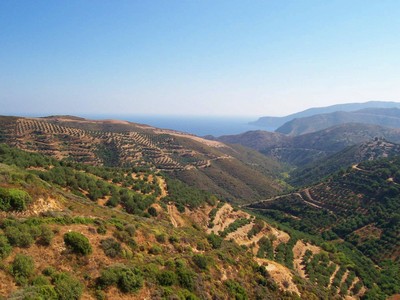
The mountains and hillsides are literally covered in thyme and their purple flowers, as well as decent smatterings of pungent sage and fragrant rosemary. You'll also find plenty of oregano and marjoram growing wild too.
Here too is the home of Cretan Dittany or "diktamos" - this is only found here on this Island of Crete, and is renowned for its special medicinal properties. Dittany of Crete is becoming more and more popular as an aphrodisiac too! Used as an herbal tea Dittany of Crete tastes fantastic.
Wild Greens (horta)
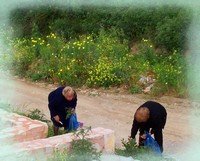
Horta are wild mixed greens of many varieties, picked from the fields and hillsides, and even roadsides, often by the women of the village.
Usually simply blanched or steamed in many parts of Greece, in Crete it is also served salad raw, drizzled with lemon juice and olive oil.
You can also find the mixed greens as a filling for Greens Pies and in omelettes.
Click the link to learn more about this fascinating, healthy and very tasty food.
Local and Seasonal Vegetables and Fruit
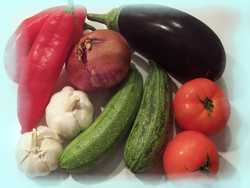
A feature of the fruit and vegetables available in Crete is their locality and freshness. Seasonal fruit and vegetables can be seen in the markets and shops, with only a limited selection of imported food.
An increase in pandering to tourists tastes may have led to an increase in imported fresh foods, but normally, only locally grown fresh vegetables and fruits is available.
There are plenty of real markets in the towns and many of the larger villages, with Chania Saturday market being the best!
Catch a Fish!
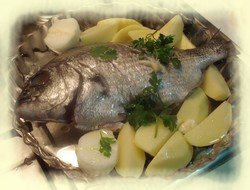
Crete is an island and fish is freely available especially in the restaurants on the coast and in fishing villages. Unfortunately, the seas around the Island are over-fished, which makes fresh fish expensive.
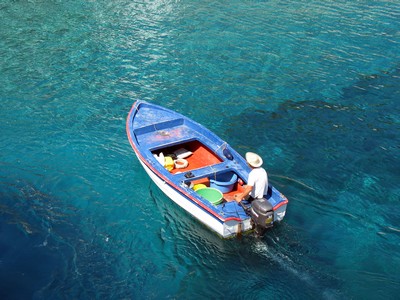
Fishing boats can be seen at almost all the coastal villages, and you'll see the fisherman swap his boat for a flat-bed truck to ply his wares in the tiny streets of the villages and towns near his port. You can catch a fish by flagging him down. You'll know he's coming because he’ll be announcing it over his truck’s tanoy. Listen out for the word psarie.
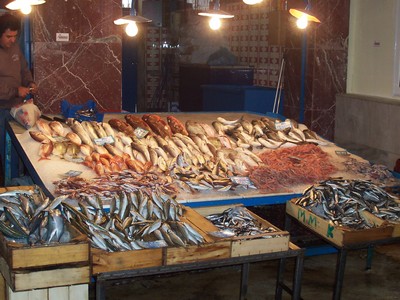
A great place to buy fish is the indoor market at Chania, although the towns and large villages will have a fresh fish shop. Usually open fronted with huge marble slabs sloping down to the shop front, filled with fishes of all sizes (in the morning).
You can also catch a fish using a rod, and you'll be joining a large contingent of sea fishermen who cast rods from the shore. Watch out if you see someone whose just caught a squid. The subsequent ritual involves bashing it violently against a large rock. This serves two purposes: it renders the poor cephalopod senseless, and also tenderises it for later cooking!
Talking of squid, you should give it a try if you haven't already. It's a very popular dish and not as expensive as other fresh fish dishes.
Going to the Butchers
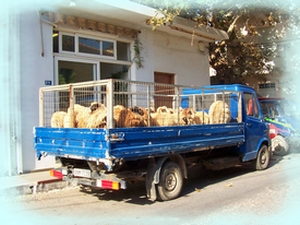
Be prepared to see animals with all their body parts dangling in the glass cabinets – heads, feet, etc. Whole rabbits are common at the butchers too. Rabbit is a common and popular Cretan Diet dish.
Usually (in our experience) the butcher is a friendly and accommodating person, and will help you if you explain what you want and how you want it. Don’t be afraid to use all your sign language and animal imitation skills!
"Steak", "chops", "mince", "chicken" – these are all familiar English words to your average Cretan Butcher. Don't be too surprised by a good command of English displayed by the staff. Also another interesting note, where we live in Kalyves - all the butchers were women!
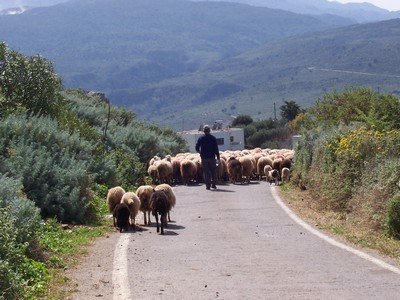
Meat production in Crete appears to have escaped the commercialisation that has blighted animal husbandry in more "developed" parts of the world. Free range animals can be seen all over the Island. You won't have to go far to see a flock of chickens scampering freely in an open space near a farm.
One thing that struck us immediately when we first came to Crete was how tasty the meat was.
Greek Mountain Tea
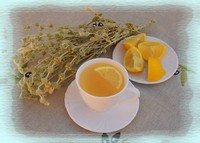
On Crete, the common name for Mountain Tea is malotira (pronounced mah-loh-TEER-rah), but many English speakers might know it as "Shepherd's Tea," because Greek shepherds would use the plants to make a brewed tea while tending their flocks high in the hills.
Greek Mountain Tea is very popular in Crete, and is enjoyed all year round, but especially in the winter months, when a nice hot brew is most appreciated!
Winter is a good time of the year to drink it to take advantage of its positive health benefits. Many villagers will tell you of its almost miraculous properties. It is said to have a positive effect on most common ailments but it is especially used for colds, breathing problems, digestion, bolstering the immune system, calming mild anxiety, and as an anti-oxidant. It can also help to reduce fevers. You can get the Tea in the markets and almost most grocery stores. Even pharmacies sell it!
Click the link to our Village Shop to buy genuine Greek Mountain Tea, and other Crete products shipped directly to you from Crete to wherever you are in the world.
Raki, or Tsikoudia
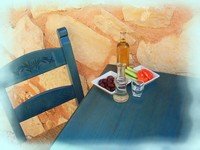
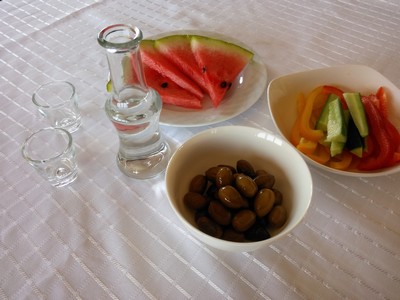
This is the local "hard stuff" and is made from what is left over after pressing the grapes - it's an important element of the Cretan food Experience.
It looks like water, and is often sold in water bottles so be careful. If you are buying a bottle of water and it’s costing you about 80 cents then you’re probably OK! (A 1½ litre (water) bottle full of Raki will cost about €7 – €8).
You'll see old men gathered at kafeneions drinking Raki from small shot glasses. It is usually served in small shapely bottles, containing about 4-6 shots each, although don’t think they measure it out! It's freely available and often given as a complimentary drink before, after and/or during your meal!
Another clear spirit you'll find and is freely available is Ouzo. This is the famous Greek drink flavoured with aniseed, and usually served with water, which makes it go cloudy. Ouzo is not a Cretan drink.
Click the link to learn more about this strong Cretan spirit.
Raki, or Tsikoudia
Cretan Wine
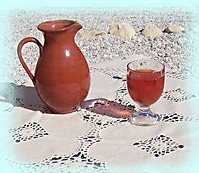
We have travelled all over Greece, and were generally disappointed with the wines on offer in the restaurants and shops. We’ve had some bad experiences, especially with red wine, which sometimes tasted like a sherry gone bad.
We found things different in Crete though.
Most Cretan wine is homemade and rarely bottled, and almost every restaurant we have visited has some excellent wine straight from the barrel. Usually locally produced, probably by the restaurant owner, the wines have been a real delight. You can ask for red, white, and sometimes rosé, but don't always expect the colour to meet your expectations.
Often, a restaurant will have a list of bottled imported wines, but we seldom bother with these, generally more expensive wines, because the barrel wine is so good.
There are a growing number of bottled Crete wines, which are pretty good too, comparing favourably with their more illustrious French cousins. A good bottle of local bottled wine will be a fantastic accompaniment to your Cretan Food Experience
Greece is quite famous for Retsina too, a pale yellowish quite strong wine, but this isn't produced in Crete and is not a Cretan wine.
We're not wine experts by any means, but we have tasted expensive wines from famous wine regions of the world, and we are happy to go with the taste and what we like. And that's usually the barrel wine! Cheap wine in Crete doesn’t mean "bad"!
Greek coffee
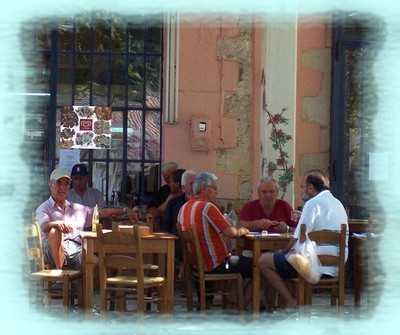
The same gentlemen you'll see sitting in the kafeneions drinking Raki in the early to late evening, will be sitting there in the morning drinking Greek Coffee.
Made from grounds heated up on a hot plate until frothy, this little hot shot of caffeine is served medium sweet, without sugar, or "glyko" – very sweet. The sugar is added at the start of the process, so the waiter will ask what type you want when you order – you don't get a sugar bowl and spoon with Greek Coffee!
When it's ready you get a small cup of dark brown liquid. make sure to wait and let it settle, because the grounds are in the cup. Again, if you drink down to the bottom you'll get a mouthful of coffee grounds. Everyone gets a glass of water with their coffee in Crete.
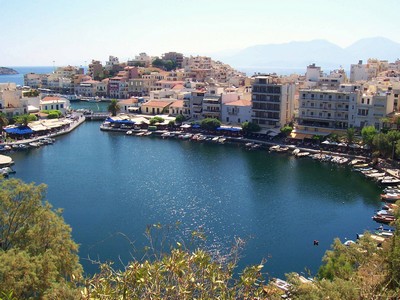
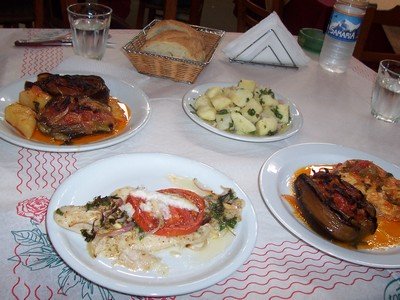
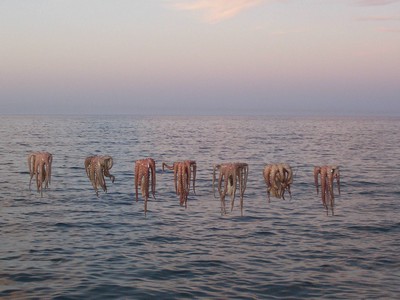
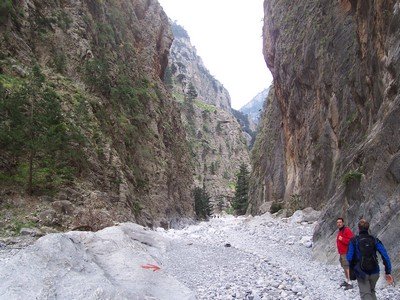
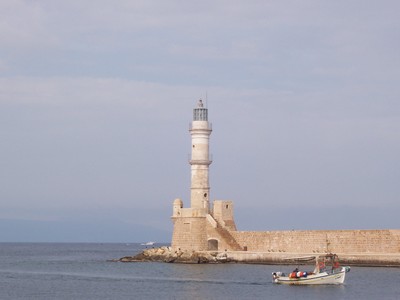
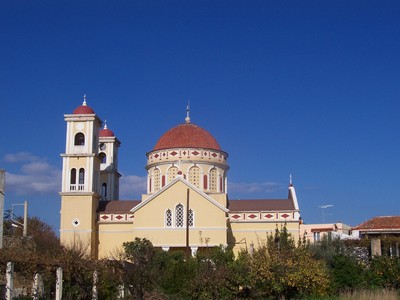
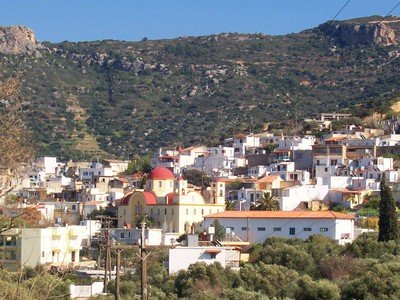
Just Some of the Reasons We Love Crete...






Did you love this page? Please share it with your friends!
© Copyright All Original Content 2006 - 2024 Completely-Crete.com. All
Rights Reserved. Reproduction in whole or in part without permission is
not permitted.
Click here to learn about developing your own money-generating website
from Solo Build It! - even with little or no web experience!